
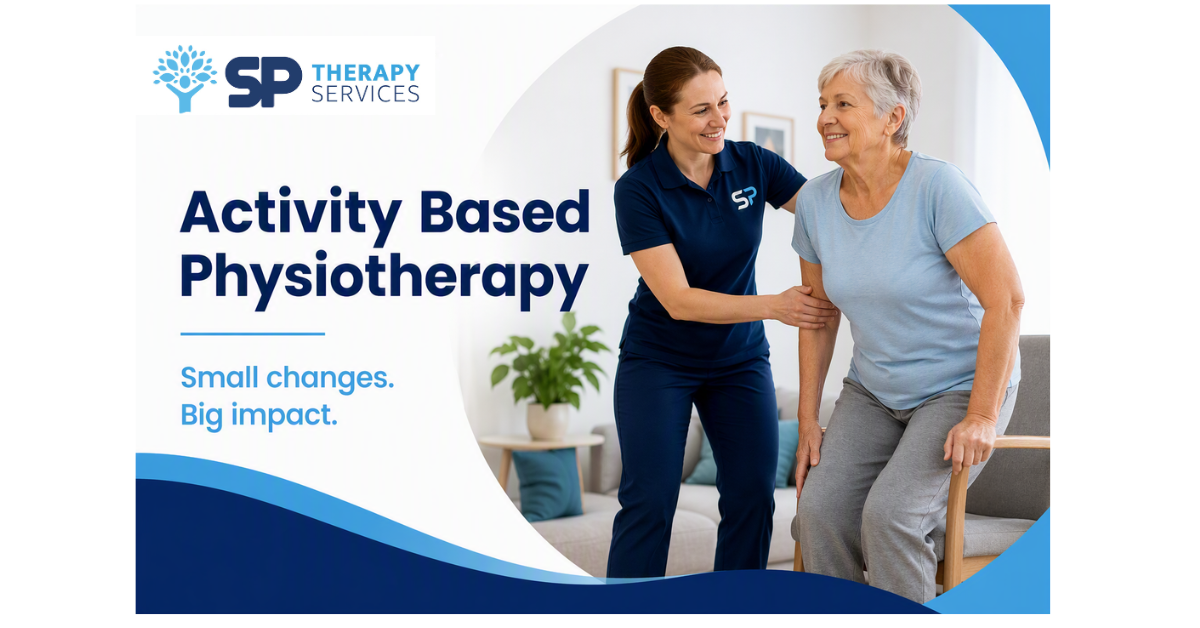
At SP Therapy Services, our activity based physiotherapy in Manchester and Stalybridge focuses on how you move throughout your entire day.
Rather than looking only at exercise sessions, we take a broader view of your movement and health. Our approach combines community-based physiotherapy with evidence-based strategies to reduce sedentary behaviour and improve functional independence.
Our Stalybridge-based physiotherapist, Jacqueline Boyle, explains how this comprehensive strategy reflects a crucial insight from the World Health Organization:
“Reducing sedentary behaviour matters just as much as increasing moderate physical activity for your overall health.”
What Makes Activity Based Physiotherapy Different?
If you’re receiving activity based physiotherapy with me, you’ll notice that I ask detailed questions about your entire lifestyle.
Getting to know you helps us understand how you move throughout the day. As experts in community-based physiotherapy, we work with you where it matters most: in your home and community.
The Science Behind Sedentary Behaviour
Research has revealed something important. Sedentary behaviour operates independently from physical activity in terms of health impact.
In other words, you can exercise regularly and still experience negative health effects if you sit for prolonged periods.
Many physiotherapy patients become more sedentary because of:
- Fatigue
- Pain
- Reduced confidence with movement
However, prolonged sitting often worsens these very issues. This creates a challenging cycle.
Activity based physiotherapy helps break that pattern.
Standing for Just One Minute Changes Everything
Here’s some encouraging news.
You do not need dramatic lifestyle changes to see benefits. Research shows that standing for just one minute each day can produce measurable improvements in health outcomes for people with sedentary behaviour.
This finding is revolutionary for physiotherapy.
Instead of setting overwhelming goals, we start with one achievable minute.
For someone who sits most of the day, standing for 60 seconds is a genuine accomplishment. Success breeds success. Once you’ve mastered one minute of standing, expanding to two minutes feels much more manageable.
How We Assess Your Activity Patterns
Activity based physiotherapy includes a comprehensive assessment of your current and previous lifestyles.
Mapping Your Typical Day
We walk through your routine from morning to night.
We look at questions such as:
- When do you sit?
- When do you lie down?
- How long do you stay in each position?
This detailed mapping often surprises people. Many do not realise how much time they spend sitting until we examine their day systematically.
Identifying Sitting Contexts
Understanding where and why you sit helps us develop targeted strategies.
For example, do you sit mostly:
- At work?
- During leisure time?
- While travelling?
Each situation presents different opportunities.
Our physiotherapy team at SP Therapy Services are experts at addressing these challenges within your home and community.
Recognising Barriers to Movement
We also explore what prevents you from moving more.
Common barriers include:
- Pain or discomfort with standing
- Fear of falling or losing balance
- Fatigue or low energy levels
- Lack of appropriate furniture or support
- Habit and routine
- Well-intentioned but over-caring support denying opportunity
By identifying these barriers, we can address them directly within your treatment plan.
Real Health Benefits of Reducing Sitting Time
Breaking up sedentary behaviour delivers numerous benefits.
Cardiovascular Health
Regular position changes improve circulation and reduce cardiovascular strain.
Metabolic Function
Moving from sitting to standing helps regulate blood sugar and improves insulin sensitivity.
Musculoskeletal Health
Frequent movement prevents muscles from becoming tight and helps maintain joint mobility.
Mental Wellbeing
Movement impacts mood, energy levels, and cognitive function.
Standing regularly can reduce brain fog and improve concentration.
Functional Independence
Practising standing and changing position helps maintain your ability to move around independently.
For physiotherapy patients, reducing sedentary time often accelerates recovery and enhances treatment effectiveness.
Practical Strategies We Implement
Our physiotherapy team works alongside you to develop realistic and personalised strategies.
Start Small and Build Gradually
We meet you where you are.
If standing for one minute feels challenging, that becomes your starting point. As it becomes more comfortable, we gradually increase the duration or frequency.
Use Habit Stacking
New behaviours are easier to maintain when linked to existing routines.
We help you identify trigger points throughout your day that naturally encourage standing or movement.
For example, you may choose to stand:
- When answering the phone
- During television adverts
- While waiting for the kettle to boil
Make Movement Functional
Standing feels more meaningful when it serves a purpose.
We incorporate position changes into activities you already do, such as:
- Preparing meals
- Folding laundry
- Socialising
As a result, movement becomes a natural part of daily life.
Ensure Safety and Support
We never compromise safety for activity goals.
Instead, we make sure you have the right support through:
- Appropriate furniture
- Mobility aids where needed
- Targeted exercises to improve strength and stability
Activity Based Physiotherapy and Neurological Conditions
For people managing neurological conditions such as stroke, Parkinson’s disease, or multiple sclerosis, activity based physiotherapy is particularly valuable.
These conditions often increase sedentary behaviour due to:
- Fatigue
- Reduced mobility
- Balance concerns
However, regular movement throughout the day can help manage symptoms and maintain independence.
Our activity based physiotherapy approach in Manchester addresses your specific neurological challenges. We consider fatigue management, balance confidence, and energy conservation as part of your treatment.
The Long-Term Impact of Small Changes
One of the most powerful aspects of activity based physiotherapy is how small changes accumulate over time.
Those minutes add up and can lead to:
- Reduced disease risk
- Improved symptom management
- Better functional capacity
- Enhanced quality of life
- Greater independence
By establishing sustainable habits rather than unsustainable exercise regimens, activity based physiotherapy creates lasting change.
Standing: The Missing Link in Functional Activity
In physiotherapy, we often see a crucial gap in how people approach movement.
Many patients focus on walking. They move from the chair to the door, or from room to room. However, they often overlook the fundamental skill that makes all functional activity possible: standing itself.
You may sit for hours and then stand only briefly before walking. As a result, you never consciously practise standing as a therapeutic activity in its own right.
This represents a missed opportunity.
Standing is the foundation for upright activities such as:
- Cooking
- Dressing
- Socialising
- Gardening
When we fail to practise standing deliberately, we lose the opportunity to build the strength, balance, and confidence that support these meaningful activities.
By incorporating conscious standing practice into your day, even for brief moments, you are not only reducing sedentary time. You are also strengthening the missing link between sitting and every functional activity you value.
This is where activity based physiotherapy truly transforms rehabilitation. Instead of simply “getting steps in”, it focuses on building genuine, lasting functional independence.
Neuroplasticity: Why Standing Practice Rewires Your Brain
Following a neurological injury, physiotherapy goes far beyond building muscle strength or completing repetitions from an exercise sheet.
The real goal is neuroplastic adaptation. This is your brain’s remarkable ability to form new neural pathways and relearn movement patterns.
Regular standing practice with:
- Good postural alignment
- Heightened foot awareness
- Functional activities
creates ideal conditions for this rewiring process.
When you stand with proper alignment while reaching for items, preparing food, or engaging in conversation, you are not simply exercising muscles. You are teaching your nervous system to integrate balance, weight-bearing, and purposeful movement at the same time.
This provides your brain with rich, meaningful input for establishing lasting motor patterns.
Unlike isolated exercises performed lying down or sitting, standing activities engage the neural circuits needed for real-world independence.
Every time you practise standing in a conscious and aligned way, you are helping reshape your brain’s capacity for functional movement.
This is neuroplasticity in action. It is also why activity based physiotherapy after neurological injury focuses on quality standing practice within meaningful contexts rather than endless repetitions of decontextualised exercises.
Frequently Asked Questions About Activity Based Physiotherapy
How long does activity based physiotherapy take to show results?
Many patients notice improvements within 2–4 weeks of consistently incorporating standing breaks and movement throughout their day.
Is activity based physiotherapy suitable after stroke?
Yes. It is particularly beneficial for neurological conditions, helping improve balance, strength, and functional independence through neuroplastic adaptation.
What conditions benefit from activity based physiotherapy?
Activity based physiotherapy is effective for:
- Stroke
- Parkinson’s disease
- Multiple sclerosis
- Chronic pain
- Post-surgical rehabilitation
- Anyone looking to reduce sedentary behaviour and improve functional independence
Do you provide activity based physiotherapy at home?
Yes. As community-based physiotherapists, we work with you in your home and community across Manchester, Stalybridge, and surrounding areas including Glossop and Derbyshire.
What’s the difference between activity based physiotherapy and traditional physiotherapy?
Activity based physiotherapy takes a holistic view of your entire day.
Rather than focusing only on exercise sessions, it aims to reduce sedentary time and incorporate functional movement throughout your daily routine.
Conclusion
Modern evidence clearly shows that reducing sedentary behaviour is just as important as increasing physical activity.
At SP Therapy Services, our activity based physiotherapy approach includes sedentary behaviour assessment as part of every evaluation because this comprehensive strategy delivers better outcomes.
Transforming your health can begin with just one minute of standing each day.
From that simple starting point, we can work together to gradually incorporate more movement into your daily routine in ways that feel safe, achievable, and sustainable.
Begin Your Activity Based Physiotherapy Journey
Ready to take a comprehensive approach to your health?
Contact SP Therapy Services today to book your assessment. Our experienced activity based physiotherapy team will evaluate your individual needs and create a personalised plan that fits your lifestyle, abilities, and goals.
Don’t let prolonged sitting undermine your health and recovery. Get in touch today and discover how small, strategic changes can lead to remarkable improvements.
Call: 0161 764 3799
Email: info@SPTherapyServices.co.uk
Book your physiotherapy assessment in Manchester or Stalybridge today.
Serving Manchester and Surrounding Areas
Our activity based physiotherapy services are available across:
- East Manchester
- South Manchester
- Stalybridge
- Tameside
- Glossop
- Derbyshire
- The High Peak
We provide home visits and community-based treatment tailored to your needs.
Looking for a Physiotherapist Near You?
If you’re located elsewhere in the North West, browse our Greater Manchester team or our South and West Yorkshire team.
About the Author
Jacqueline Boyle brings extensive experience in facilitating activity levels and reducing sedentary behaviour for clients across East and South Manchester, as well as Glossop and Derbyshire.
Jacqueline Boyle
Chartered Physiotherapist based in Stalybridge
Professional Qualifications
- BSc (Honours) 2:1 Physiotherapy, Glasgow Caledonian University (2005)
- Registered with the Health & Care Professions Council
- Member of the Chartered Society of Physiotherapy
Read her full profile here: