
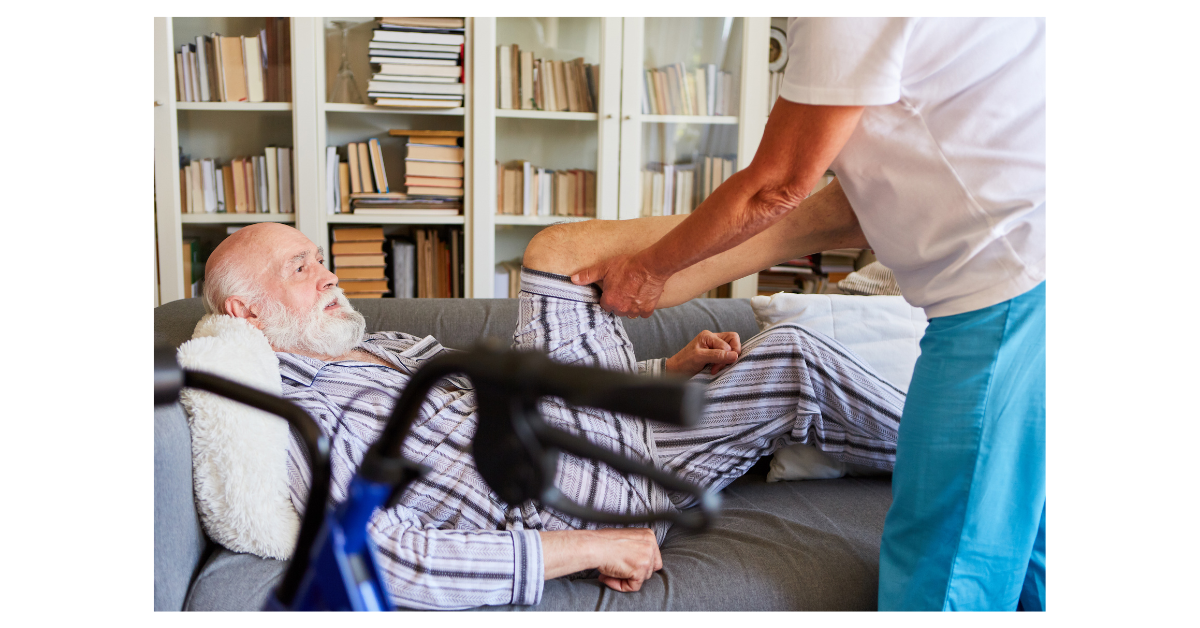
Living with Parkinson’s Disease means navigating a complex relationship with movement. Tasks that once felt automatic—such as walking, turning, or reaching—now require effort and concentration. Parkinson’s physiotherapy at home helps people manage these challenges in a practical, personalised way.
Medication helps manage symptoms, but it is only part of the picture. Parkinson’s physiotherapy at home in Lancashire can make a meaningful difference to your independence, confidence, and quality of life.
I’m Rob, a Chartered Physiotherapist specialising in neurological conditions. I’m based in Blackburn and support people living with Parkinson’s across Lancashire and Greater Manchester.
With Parkinson’s Awareness Month approaching, I want to share seven key ways Parkinson’s physiotherapy at home supports movement and independence—because understanding what’s possible is the first step.
1. Teaching Your Brain New Movement Strategies
Parkinson’s Disease affects the brain’s automatic movement systems. The basal ganglia no longer manage smooth, coordinated movement effectively. As a result, movement becomes effortful.
However, Parkinson’s physiotherapy at home focuses on retraining the brain.
Through neuroplasticity, your brain can form new pathways. We use:
- Visual cues
- Rhythmic patterns
- Cognitive attention
- External cueing
For example, if you experience freezing when walking, we may practise:
- Stepping over visual markers
- Counting rhythms
- Taking larger, deliberate steps
As a result, your brain learns to bypass the faulty automatic system.
Importantly, practising these strategies at home helps you apply them where they matter most.
2. Making Large Movements Feel Natural Again
A key symptom of Parkinson’s is bradykinesia (slowness of movement), often combined with smaller movements.
Parkinson’s physiotherapy at home in Lancashire focuses on “thinking big.” This means practising exaggerated movements to retrain your brain.
For example:
- Taking larger steps
- Swinging your arms more
- Reaching fully
- Turning with bigger movements
- Standing with power
At first, these movements feel unnatural. However, with practice, they become your new normal.
Research shows that this type of amplitude training improves movement long-term.
3. Parkinson’s Physiotherapy at Home for Balance and Falls Prevention
Falls are a major concern for people living with Parkinson’s. Balance problems can result from multiple factors, including posture, reduced reflexes, and cognitive load.
Therefore, Parkinson’s physiotherapy at home uses targeted, progressive balance training.
We focus on:
- Preparing for movement
- Reacting to balance loss
- Using sensory input
- Managing dual tasks
For example, in your home, we assess real challenges such as:
- Turning in tight spaces
- Navigating stairs
- Reaching into cupboards
- Walking on uneven surfaces
Then, we design exercises that directly address these situations.
Because training happens in your home, improvements transfer immediately to daily life.
4. Managing Freezing Episodes
Freezing of gait can be one of the most frustrating Parkinson’s symptoms. It often occurs when starting to walk, turning, or approaching doorways.
Parkinson’s physiotherapy at home in Lancashire provides practical strategies to manage this.
These include:
- Visual cues (lines or objects to step over)
- Auditory cues (rhythms or music)
- Cognitive strategies (counting or mental prompts)
We identify exactly where freezing happens in your home and practise solutions in those specific situations.
Interestingly, many people find that humming a tune helps. This works because rhythm supports movement.
5. Managing Fatigue and Conserving Energy
Fatigue in Parkinson’s is more than tiredness. It is a deep, neurological exhaustion.
That’s why Parkinson’s physiotherapy at home includes energy management strategies.
We look at:
- Daily routines
- Activity timing
- Rest patterns
- Task efficiency
For example, we may:
- Group similar tasks together
- Plan activities during high-energy periods
- Introduce regular rest breaks
- Simplify energy-draining activities
As a result, you can maintain independence for longer.
6. Parkinson’s Physiotherapy at Home for Real-Life Goals
Exercise is most effective when it is meaningful. Therefore, Parkinson’s physiotherapy at home in Lancashire focuses on your personal goals.
For example, you may want to:
- Walk to local shops
- Spend time in your garden
- Play with grandchildren
- Return to hobbies
Instead of generic exercises, we practise movements in real-life settings.
For instance:
- Gardening tasks in your garden
- Walking routes you use regularly
- Navigating real pavements and steps
This approach improves motivation and results.
One person I supported in Rawtenstall wanted to return to church. By practising the exact challenges she faced, she regained confidence and independence within months.
7. Providing Long-Term Support
Parkinson’s is a progressive condition. Therefore, your physiotherapy needs will change over time.
Parkinson’s physiotherapy at home offers flexible, ongoing support.
This includes:
- Adjusting exercises as needed
- Supporting new challenges
- Providing regular reviews
Additionally, long-term support allows early identification of changes that may require medical input.
Many people across Lancashire say that consistent physiotherapy support makes a significant difference to their quality of life.
Why Choose Parkinson’s Physiotherapy at Home?
Your home is where movement matters most.
Home-based physiotherapy:
- Reflects your real environment
- Involves family or carers
- Reduces travel fatigue
- Provides consistent support
As a result, therapy becomes more effective and practical.
Parkinson’s Awareness Month
April is Parkinson’s Awareness Month. It aims to increase understanding of Parkinson’s and support over 150,000 people living with the condition in the UK.
If you are living with Parkinson’s in Lancashire or Greater Manchester, Parkinson’s physiotherapy at home can make a real difference.
Get Expert Parkinson’s Physiotherapy at Home
I’m Rob, a Chartered Physiotherapist specialising in neurological rehabilitation. I provide Parkinson’s physiotherapy at home in Lancashire and Greater Manchester, tailored to your needs.
If you would like to explore how physiotherapy can support you, please get in touch.
📞 0161 764 3799
📧 info@sptherapyservices.co.uk
Although I am based in Blackburn, I work alongside neuro physiotherapy colleagues across Bury, Bradford, Stalybridge, Holmfirth, and Barnsley.