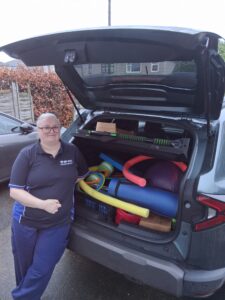

Working as a neurological physiotherapist in patients’ homes, I witness first-hand how adaptive movement patterns after brain injuries affect daily function and make life challenging for my patients. Whether you’re recovering from a stroke, head trauma, or another neurological event, recognising what causes these adaptive movement patterns is vital for successful rehabilitation.
Defining Movement Patterns in Brain Injuries
After a brain injury, damaged neural pathways force the body to move differently. Typical movement patterns emerge as the nervous system creates alternative routes to control muscles and coordinate actions, enabling the person to function.
Without redirection through rehabilitation, these adaptive patterns can become habitual over time. Although adaptive movement patterns enable basic function initially, many create inefficient movement that hinders long-term recovery. Therefore, early identification and intervention can prevent these patterns from becoming permanent.
Neuroplasticity is the brain’s capacity to change and adapt in response to experience. Think of the brain as a dynamic map. When an area becomes damaged, surrounding areas can sometimes take over functions previously handled by the affected region. This extraordinary adaptability ensures that, while injuries can alter the map, they do not erase it entirely.
Through guided exercises and therapeutic interventions, we can help direct this rewiring process, making recovery possible. However, to know what to do, we first need to understand adaptive movement patterns.
Upper Limb Patterns Following Brain Injury
Spasticity and Flexor Dominance
Increased muscle stiffness, or spasticity, represents one of the most common adaptive movement patterns in brain injuries. The affected arm typically adopts a characteristic posture:
- Shoulder elevation and retraction
- Elbow held in flexion
- Forearm rotated inward
- Clenched fist with bent wrist
As a result, this flexor dominance makes reaching, grasping, and releasing objects incredibly difficult. Patients often cannot open their hand voluntarily, which severely limits functional independence.
Loss of Selective Control
Additionally, brain injury disrupts the ability to move individual joints separately. Instead, the entire arm may move as one rigid unit rather than with coordinated, segmented motion. Consequently, this loss of selective control dramatically impacts everyday tasks such as dressing, eating, and personal care.
Characteristic Lower Limb Movement Patterns in Brain Injuries
Gait Patterns (Walking)
Walking difficulties are prominent following brain injury. The extensor pattern typically features:
- Stiff, straight leg
- Hip hiking to advance the limb
- Circumduction (leg swinging outward)
- Foot drop or inversion
- Toe dragging
As a result, walking becomes slow, effortful, and energy-consuming. In addition, it increases fall risk and can limit community mobility.
Asymmetrical Weight Distribution
Most patients shift weight away from their affected side, creating postural asymmetry. They overload the unaffected leg, which prevents proper sensory feedback and muscle activation on the weaker side.
This imbalance affects standing tolerance, transfers, and walking endurance. Therefore, retraining symmetrical weight-bearing becomes a rehabilitation priority.
Core Stability and Trunk Patterns
Trunk control underpins all functional movement. Following brain injury, weakness in the abdominal and back muscles creates significant challenges.
Patients frequently exhibit lateral trunk flexion, leaning persistently toward the affected side. This positioning compromises sitting balance, reaching ability, and respiratory function. Moreover, poor trunk stability prevents effective arm and leg use during functional activities.
Understanding the Impact on Daily Function
These adaptive movement patterns profoundly affect independence. Simple activities such as standing from a chair, walking to the bathroom, or preparing a meal become exhausting challenges.
Furthermore, these movement patterns increase energy expenditure. As a result, patients tire quickly, which limits participation in rehabilitation and social activities. Addressing movement quality—by supporting neuroplastic reorganisation of the brain rather than focusing only on muscle strength—becomes essential for meaningful functional improvement.
Benefits of Specialist Home Assessment
Assessing movement patterns in your home environment provides invaluable insights. I can evaluate how you navigate your living space, use your furniture, and manage daily routines, because your environment dictates how you move.
For example, a step in a clinic is uniform in height and depth. However, the steps outside your front door can present an entirely different challenge. Similarly, learning to walk in a straight line across a smooth gym floor does not reflect the reality of navigating tight turns in your kitchen.
Home visits also enable practical problem-solving. We can modify your environment, practise real-life tasks, and train family members to support your recovery effectively. Neuroplasticity is most effective when improved movement patterns are repeated frequently and in context. Therefore, using your home environment effectively creates your own rehabilitation space.

The Science of Recovery: Neuroplasticity
A brain injury does not mean permanent disability. Neuroplasticity—the brain’s ability to rewire itself—offers genuine hope for recovery at any stage.
Through intensive, task-specific practice, you can retrain movement patterns, even years after injury. The key lies in consistent repetition of correct movement, with gradual increases in difficulty as control improves. Each successful movement strengthens new neural pathways, making normal patterns easier over time.
Conclusion
Adaptive movement patterns following brain injury create unique challenges for each individual. From upper limb spasticity to walking difficulties and trunk instability, these patterns require expert assessment and targeted treatment strategies.
Neuroplasticity is the brain’s ability to effect change after injury. However, this change can be either positive or negative. Therefore, the physiotherapist’s role as a movement expert is to understand how a patient moves and design neuro-active exercises that support recovery.
As a neurological physiotherapist, my role involves identifying problematic patterns, understanding their functional impact, and designing personalised interventions that retrain the nervous system. Home-based treatment ensures physiotherapy addresses real-world needs and goals.
Take the First Step Toward Better Movement
Do not let adaptive movement patterns limit your recovery potential. SP Therapy Services offers specialist neurological physiotherapy delivered in the familiarity of your own home, turning every daily activity into an opportunity to improve.
Contact SP Therapy Services today to arrange a comprehensive movement assessment and discover how we can help you move better and live more independently.
Contact us here.
Email: Info@sptherapyservvices.co.uk
Phone: 0161 764 3799
About the Author
Rebecca Dickson, based in Bradford, West Yorkshire
BSc (Hons) Physiotherapy, First Class, University of Bradford, 2024
Registered with the Health & Care Professions Council
Member of the Chartered Society of Physiotherapy
Read Rebecca’s full profile here.