Waking up to a drooping face, an eye that won’t close, or a smile that no longer looks like your own is a frightening experience. If you or someone you love has recently been diagnosed with facial palsy, you are likely searching for answers — and for hope. Physiotherapy for facial palsy is one of the most effective tools available for supporting recovery, improving movement, and helping people regain confidence in their appearance and daily life. At SP Therapy Services, we specialise in this area, and in this post we explain exactly what physiotherapy can help with when it comes to facial palsy.
What Is Facial Palsy?
Facial palsy is a condition in which the muscles on one or both sides of the face become weak or completely paralysed. It happens when the facial nerve — the nerve responsible for controlling facial movement — is damaged or disrupted.
The most common cause is Bell’s palsy, a sudden onset of facial weakness that typically affects one side of the face. However, facial palsy can also result from:
- Ramsay Hunt syndrome (caused by the shingles virus)
- Acoustic neuroma surgery or other head and neck surgery
- Stroke
- Trauma or injury to the face or skull
- Lyme disease
- Parotid gland tumours
The symptoms vary depending on the cause and severity, but they commonly include drooping of the mouth or eye, difficulty eating and drinking, problems with speech, an inability to close the eye fully, altered taste, and increased sensitivity to sound. Understandably, these changes can have a significant impact on a person’s confidence and mental wellbeing, not just their physical function.
What Can Physiotherapy Help With in Facial Palsy?
Physiotherapy is not just about muscles and movement — although it addresses both of those things in detail. When it comes to facial palsy, a specialist physiotherapist provides a tailored, evidence-based programme that supports recovery at every stage. Here is a breakdown of the key areas where physiotherapy makes a real difference.
Retraining Facial Movement and Muscle Function
One of the primary goals of physiotherapy in facial palsy is neuromuscular retraining — teaching the brain and the facial muscles to reconnect and work together again. This is a gradual and highly individualised process.
Your physiotherapist will assess which specific muscles are affected and to what degree. They will then guide you through targeted exercises designed to stimulate nerve regeneration and restore coordinated movement. These exercises are typically very small and precise — facial muscles are delicate, and the wrong exercises at the wrong time can actually reinforce unhelpful movement patterns.
Consequently, it is important to work with a physiotherapist who has specialist training in facial palsy, rather than following generic exercises found online, which may be inappropriate for your stage of recovery.
Managing Synkinesis
Synkinesis is one of the most common and frustrating complications of facial palsy recovery. It occurs when nerve fibres regrow along the wrong pathways, causing unwanted, involuntary movements. For example, someone with synkinesis might find that their eye closes every time they smile, or that their mouth moves when they blink.
Physiotherapy plays a crucial role in managing and reducing synkinesis. Techniques include:
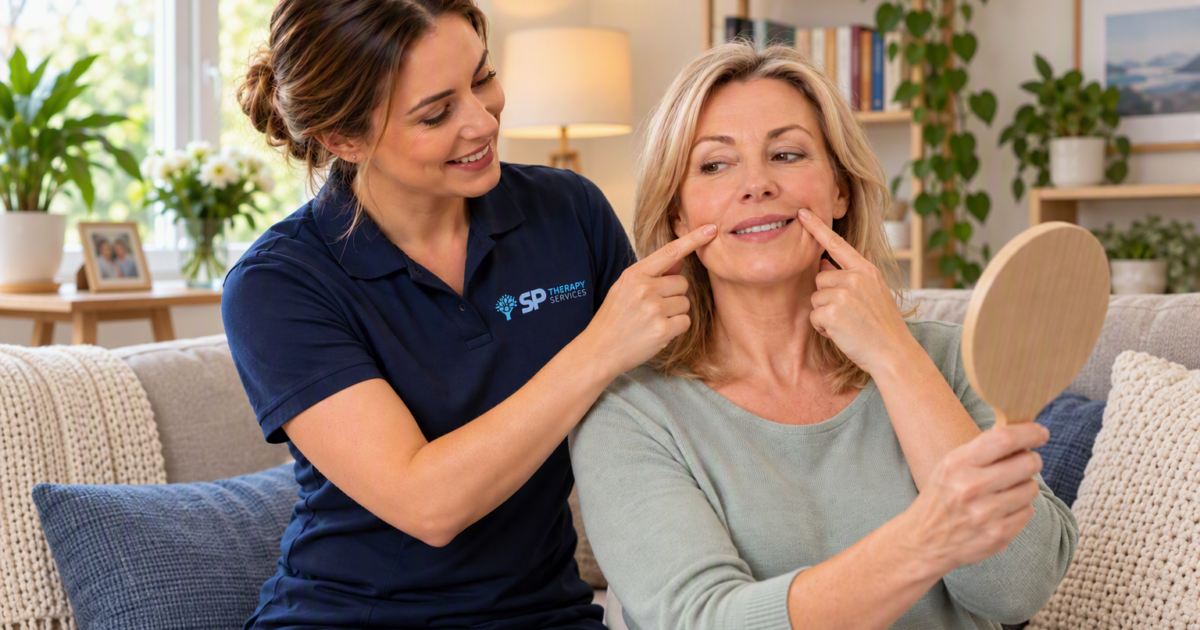
- Mirror biofeedback therapy — using a mirror (or video feedback) to help you retrain movement patterns consciously
- Soft tissue massage — reducing tightness and overactivity in affected muscles
- Inhibition exercises — learning to relax overactive muscles while activating weaker ones
With consistent physiotherapy input, many people see a significant reduction in synkinesis over time, allowing for more natural and symmetrical facial movement.
Eye Care and Protection
When facial palsy prevents the eye from closing fully, the cornea is at risk of drying out and becoming damaged. Whilst eye drops and protective eyewear are the first line of defence, physiotherapy can help by working to restore eye closure and improving the strength and coordination of the muscles around the eye.
Your physiotherapist will also advise you on safe eye care strategies and liaise with your ophthalmologist or GP where needed. Protecting your vision is a priority, and physiotherapy supports this alongside your wider medical care.
Physiotherapy for Facial Palsy: Addressing Pain and Tightness
Many people with facial palsy experience pain, aching, or a feeling of tightness — particularly in the affected side of the face, the jaw, the neck, and the ear. This discomfort can arise from the condition itself, from abnormal muscle tension, or from compensatory patterns that develop as the body tries to adapt.
Physiotherapy addresses this in several ways. Hands-on manual therapy techniques can release tight muscles and reduce tension in the jaw and neck. Specific stretching and relaxation exercises help to ease chronic tightness. Additionally, physiotherapists can provide guidance on posture and body mechanics that may be contributing to pain.
Importantly, addressing pain and tightness early prevents these patterns from becoming entrenched, which makes them harder to treat over time.
Supporting Psychological Wellbeing
The emotional impact of facial palsy is significant and often underestimated. The face is central to how we communicate and how we present ourselves to the world. Changes in facial symmetry or movement can lead to social withdrawal, anxiety, low self-esteem, and depression.
A good physiotherapist acknowledges this reality. Alongside the physical treatment, we take the time to listen, to explain what is happening and why, and to set realistic but encouraging expectations for recovery. We also work collaboratively with psychologists, counsellors, and facial palsy support organisations where additional emotional support would be beneficial.
Seeing genuine progress — however small — has a powerful effect on a person’s confidence and motivation. That is why the structured, goal-oriented nature of physiotherapy is so valuable in this condition.
When Should You Start Physiotherapy for Facial Palsy?
The answer is: as soon as possible. Early physiotherapy intervention leads to better outcomes in the majority of cases. In the acute phase — the first few weeks after onset — a physiotherapist can provide essential guidance on what to do and, just as importantly, what not to do. Certain exercises are counterproductive in the early stages and can worsen outcomes if started too soon or carried out incorrectly.
Even if you have been living with facial palsy for months or years, it is never too late to seek physiotherapy. Many people see meaningful improvements long after the initial episode, particularly with specialist synkinesis management or if they have never received targeted physiotherapy before.
What to Expect at Your First Appointment
At SP Therapy Services, your first appointment begins with a detailed assessment. We take a thorough history, assess the degree and pattern of facial muscle weakness or tightness, evaluate any synkinesis, and discuss how the condition is affecting your daily life and wellbeing.
From there, we develop a personalised treatment plan with clear goals. We also teach you a specific home exercise programme — because consistency between sessions is one of the most important factors in achieving a good outcome. We review and progress your programme at each visit, adapting it as your recovery develops.
Conclusion
Facial palsy can be isolating and frightening, but you do not have to navigate it alone — and you do not have to accept the situation as it is. Physiotherapy for facial palsy offers practical, evidence-based support that can genuinely transform outcomes. From retraining movement and managing synkinesis to reducing pain and supporting your emotional wellbeing, physiotherapy addresses every aspect of living with and recovering from facial palsy.
At SP Therapy Services, we are here to help. If you have been affected by facial palsy — whether recently or some time ago — contact us today to arrange an initial assessment. Our specialist physiotherapists will take the time to understand your situation and create a plan that is right for you. Get in touch via our website, by phone, or by email — we look forward to supporting your recovery.