Brain injury presents a complex web of challenges that extend far beyond the initial neurological damage. While the brain works to heal and rewire itself, patients often face significant secondary complications that can profoundly impact their recovery journey.
The Hidden Impact of Immobility
Following a brain injury, individuals frequently spend extended periods immobilised in intensive care units or recovering from multiple trauma injuries sustained during the same incident. This prolonged inactivity creates a cascade of physical problems that compound the original neurological symptoms. Muscle weakness develops rapidly during bed rest, with studies showing strength can decline by up to 20% within just one week of immobility. Joint stiffness follows closely behind, as connective tissues shorten and become less flexible without regular movement.
The brain injury itself also directly contributes to these mobility challenges. Damaged neural pathways can disrupt the normal communication between the brain and muscles, leading to weakness, altered muscle tone, and coordination difficulties. Spasticity—involuntary muscle contractions—can further restrict joint movement and create painful contractures if left unaddressed.
Why Early Intervention Matters
Research consistently demonstrates that rehabilitation should begin as early as medically possible. However, the complex nature of brain injury often means that comprehensive physiotherapy is delayed while medical teams address life-threatening complications or multiple injuries. This delay can significantly impact long-term outcomes, as neuroplasticity—the brain’s ability to form new neural connections—is most active in the early stages of recovery.
Every day of delayed intervention can mean lost opportunities for optimal recovery. Muscles continue to weaken, joints become increasingly stiff, and functional movement patterns may become more difficult to restore.
The Home Advantage
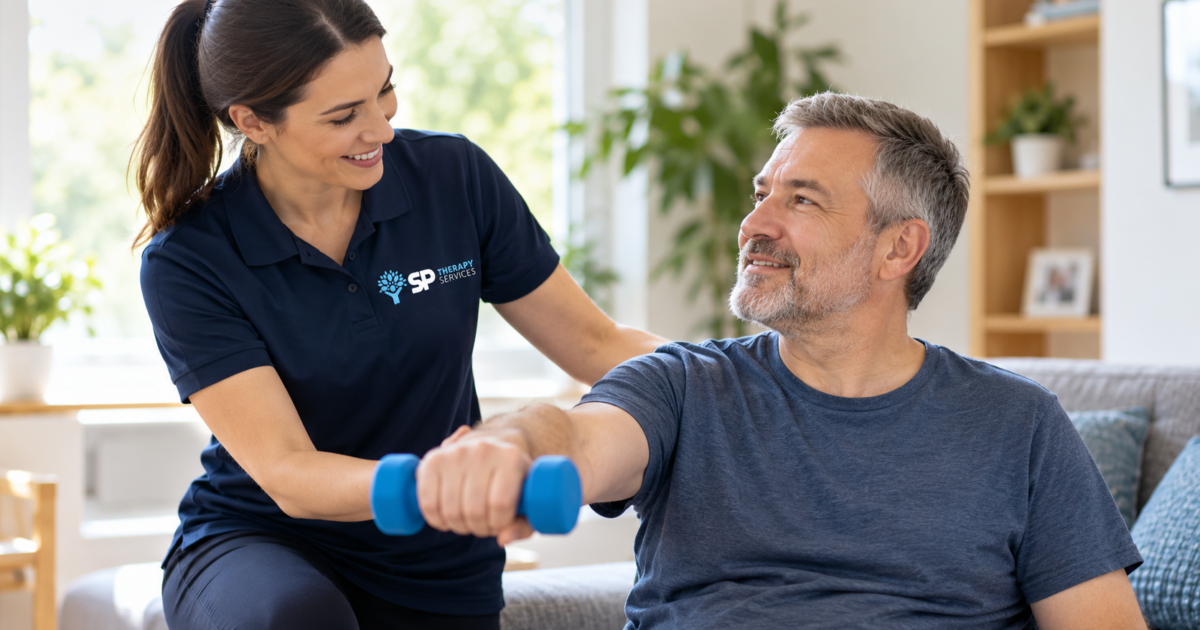
This is where specialist neurological physiotherapy in the home environment becomes invaluable. As soon as patients are medically stable for discharge, home-based rehabilitation can bridge the crucial gap between hospital care and full recovery. Working in familiar surroundings allows physiotherapists to address real-world challenges while patients rebuild strength and mobility in the environment where they’ll ultimately need to function.
Our specialist team across Greater Manchester, Lancashire, and South and West Yorkshire understands that every brain injury is unique. We provide tailored programmes that address both the neurological impacts and the secondary complications of prolonged immobility, helping patients reclaim their independence one movement at a time.
Starting rehabilitation at home means starting recovery without delay—because when it comes to brain injury, time truly matters.
Ready to start your rehabilitation journey?
We provide home visits across Greater Manchester, Lancashire, West and South Yorkshire.
We have specialist physiotherapists based in Bury, Bolton, Bradford, Holmfirth, Blackburn, Stalybridge, and Barnsley.
Contact Us
Are you a Case Manager looking for a physiotherapist to join your MDT?
Having been established more than 27 years we are trusted by case managers and solicitors. We pride ourselves on our clinical reputation for excellence but also have an in depth understanding of the medicolegal landscape. We provide timely 3 monthly treatment plans and update with SMART goals and costings to ensure you are constantly informed.