
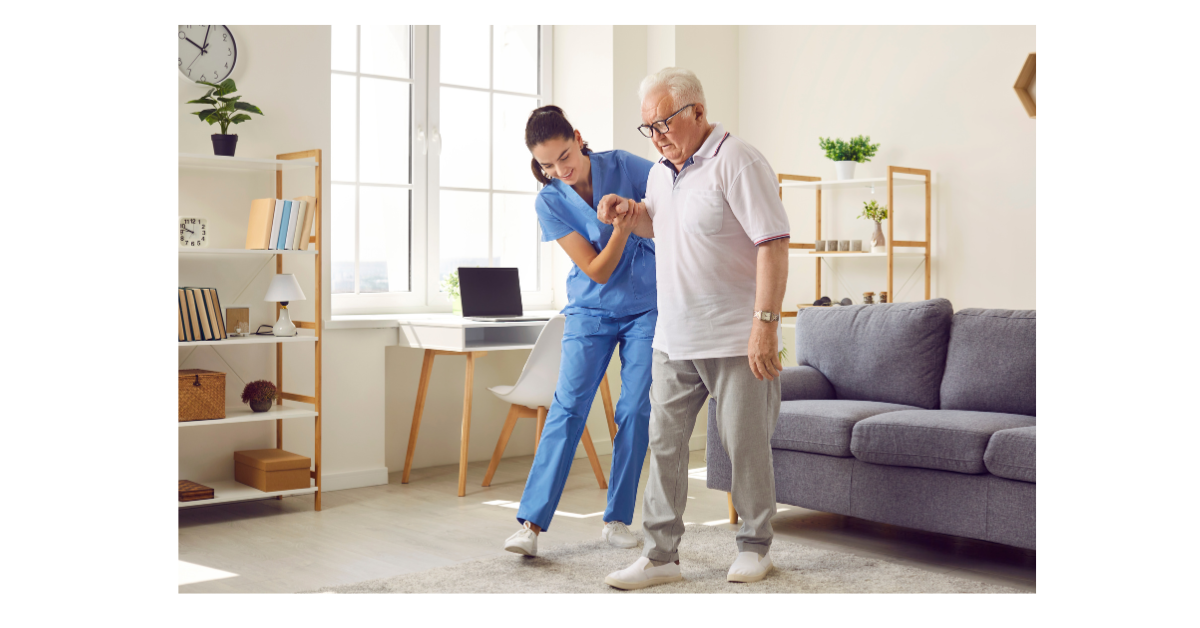
Fear of falling is one of the most significant yet often overlooked risk factors for falls in older adults and people living with neurological conditions. At SP Therapy Services, our specialist physiotherapists understand that addressing the psychological aspects of fall risk is just as important as treating the physical factors — and we do this in the comfort and safety of your own home. Consequently, this approach makes fear of falling and home-based physiotherapy an important area of falls prevention.
Understanding fear of falling and home-based physiotherapy
A fall can be a debilitating experience. Research shows that one third of people over 65 will experience a fall each year. While physical risk factors such as muscle weakness, poor balance, and medication side effects are well recognised, current research suggests that fear of falling may be an even greater contributor to falls than many traditional risk factors.
Importantly, two thirds of older adults experience and express fear of falling, and this anxiety has profound effects on movement and safety. When someone is preoccupied with the fear of falling, their attention is diverted away from the complex task of moving safely through their environment.
How fear of falling and home-based physiotherapy impact falls risk
The relationship between fear and falling creates a dangerous cycle.
Altered movement patterns
Anxiety about falling causes the body to move awkwardly. People may stiffen up, take shorter steps, or become visually disengaged from obstacles in their path. Consequently, these compensatory strategies actually increase the risk of trips, slips, and loss of natural balance reactions.
Reduced activity and deconditioning
Fear often leads people to unnecessarily withdraw from physical and social activities. This creates a vicious cycle where reduced movement leads to muscle weakness, reduced balance, loss of confidence, and ultimately an even greater fall risk.
Loss of self-efficacy
When people lose confidence in their ability to move safely, their belief in their own capabilities diminishes. This psychological impact can be as limiting as any physical impairment.
What research tells us about overcoming fear of falling
Recent multidisciplinary research has significantly increased our understanding of how fear of falling contributes to falls. Evidence shows that exercise-based activities with a cognitive element of movement execution help to improve balance confidence and self-efficacy, which both reduce the fear of falling and the actual risk of falls.
Interestingly, some research suggests that allowing people to experience controlled near-falls in a safe environment — and helping them analyse how it feels before, during, and after — can build confidence. Understanding that you can avoid a fall, or knowing how to react and get up independently if a fall does occur, can significantly reduce anxiety and improve safety.
How SP Therapy Services uses home-based physiotherapy to reduce fear of falling
Our community-based physiotherapy approach is ideally suited to addressing fear of falling because we work with you in your own environment — the place where you need to feel most confident and safe. Therefore, the fear of falling and home-based physiotherapy is a powerful combination for reducing falls risk.
Home-based falls prevention assessment
During our home visits, we:
-
Conduct comprehensive fall risk assessments in your actual living space, identifying both physical and environmental factors
-
Assess your movement patterns in the context of your daily routines and the layout of your home
-
Identify anxiety triggers specific to your environment such as stairs, bathrooms, or uneven flooring
-
Evaluate your balance confidence and how fear may be affecting your movement strategies
Personalised treatment in your environment
Working in your home allows us to:
-
Practice real-world tasks such as navigating your stairs, moving safely around furniture, and managing transfers from your own bed or chair
-
Address specific environmental challenges that trigger your fear of falling
-
Build confidence gradually in the spaces where you need it most
-
Develop practical strategies that fit your home layout and daily routine
-
Include cognitive-motor training that combines physical exercises with attention and planning tasks
-
Teach safe falling techniques and floor recovery strategies in a controlled, supportive environment
The benefits of home-based falls prevention
Our clients often tell us that working at home makes a significant difference:
-
Reduced anxiety: No travel stress or unfamiliar clinical environments
-
Practical solutions: Recommendations that actually fit your space and lifestyle
-
Immediate application: You can practice what you learn in the environment where you need it
-
Family involvement: Carers and family members can easily participate in sessions
-
Sustainable progress: Skills learned at home are more likely to become part of your daily routine
Breaking the fear of falling cycle with home-based physiotherapy
Overcoming fear of falling requires a combination of physical strengthening, balance training, cognitive strategies, and gradual exposure to challenging activities in a supported way. Our specialist physiotherapists work with you to:
-
Rebuild physical capabilities through targeted strengthening and balance exercises
-
Improve movement quality to restore natural, confident movement patterns
-
Develop coping strategies for managing anxiety and attention during movement
-
Set achievable goals that progressively build confidence
-
Create personalised home exercise programmes that maintain progress between visits
Who can benefit from fear of falling and home-based physiotherapy?
Our falls prevention physiotherapy supports:
-
Older adults who have experienced falls or near-misses
-
People with a fear of falling that limits their activities
-
Individuals living with neurological conditions such as stroke, Parkinson’s disease, or MS
-
Anyone experiencing reduced confidence in their mobility
-
Family members and carers concerned about fall risk
Take the first step toward confident movement
If fear of falling is affecting your independence, confidence, or quality of life, our specialist physiotherapists across Greater Manchester, Lancashire, and Yorkshire are here to help. We provide evidence-based, personalised falls prevention physiotherapy in your own home, where you need it most.
Contact SP Therapy Services today to arrange a home-based falls risk assessment.
About the author
Jacqueline Boyle, Chartered Physiotherapist, Stalybridge
Professional Qualifications:
BSc (Honours) 2/1 Physiotherapy Glasgow Caledonian University 2005
Registered to Health & Care Professions Council
Member of Chartered Society of Physiotherapy
References
Friedman S.M., Munoz B., West S.K., et al. Falls and Fear of Falling: Which Comes First? A Longitudinal Prediction Model Suggests Strategies for Primary and Secondary Prevention. Journal of the American Geriatric Society 2002; 50:1329-1335.
Gusi N., Adsuar J.C., Corzo H., et al. Balance training reduces fear of falling and improves dynamic balance and isometric strength in institutionalised older people: a randomised trial. Journal of Physiotherapy 2012; 58: 97-104.
Kumar A., Delbaere K., Zijlstra G.A., et al. Exercise for reducing fear of falling in older people living in the community: Cochrane systematic review and meta-analysis. Age and Ageing 2016; 45:345–352.
Young W.R, Williams A.M. How fear of falling can increase fall-risk in older adults: Applying psychological theory to practical observations. Gait & Posture 2015; 41: 7–12.
Sturnieks D.L., Menant J., Valenzuela M., et al. Effect of cognitive-only and cognitive-motor training on preventing falls in community-dwelling older people: protocol for the smart±step randomised controlled trial. BMJ Open 2019; 9:e029409.
Editor’s Notes
This article was first published in October 2019, and has been comprehensively updated in November 2025 to reflect significant developments in falls prevention and evidence supporting community-based rehabilitation. All information has been reviewed to ensure accuracy and relevance to current best practices and service provision by SP Therapy Services.